
What to Wear Skiing: The Layering System, Materials, and Accessories
The 10 concrete items of a ski outfit — base, mid and outer layers, socks, gloves, headwear, eyewear and a helmet — drawn from REI, NSAA, Vail Resorts and CDC guidance, with what to skip and why.
How this guide was built: Guidevio compiled it from REI's expert advice pages, NSAA and PNSAA safety guidance, Vail Resorts/Discover Vail guest packing pages, and CDC cold-weather safety pages. Nothing here was tested by Guidevio, and this is not a ranking of brands or products. Links go to the official source pages and earn no commission today; if that changes, it will be disclosed here.
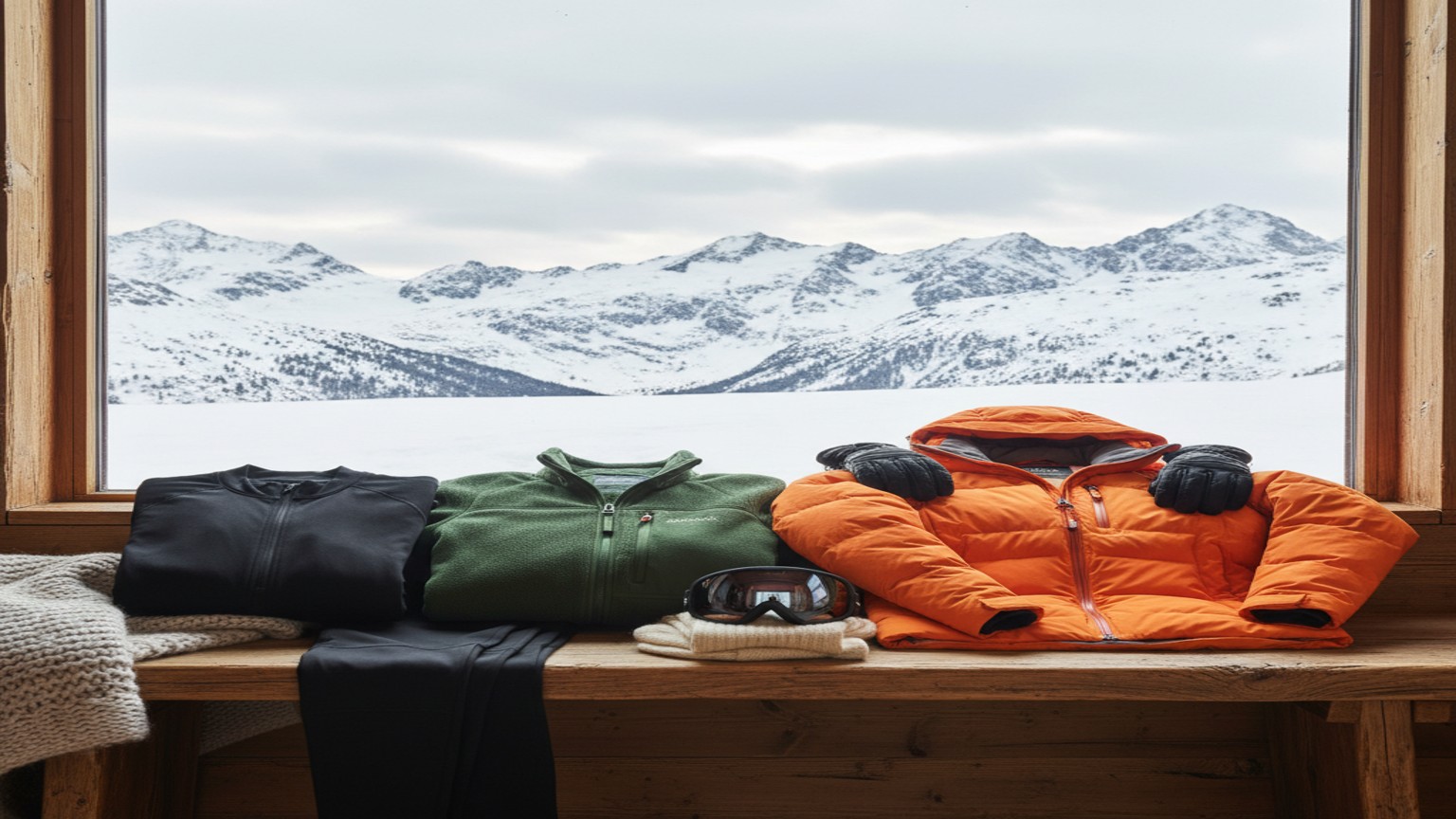
Skiing moves between hard exertion on a run and standing still in a lift line, so the right clothing strategy is a set of adjustable layers rather than one heavy outfit. The list below covers the 10 concrete pieces that make up that system — base layer, mid layer, outer jacket, snow pants, socks, gloves or mittens, headwear, eye protection, sun protection and a helmet — based on outdoor-industry expert advice, resort guest guidance and public health safety agencies.
What differs most between these pieces is the job each one does: base layers wick sweat, mid layers trap heat, outer layers block wind and moisture, and the accessories protect the parts of the body — head, hands, eyes and skin — that lose heat fastest or take the most sun exposure on snow.
What was checked for this guide: REI's expert advice pages on cold-weather and ski/snowboard clothing, the National Ski Areas Association's official safety tips, the Pacific Northwest Ski Areas Association's mountain safety guide, Vail Resorts' and Discover Vail's guest packing guidance, and CDC pages on preventing hypothermia and frostbite. Anything not stated in those sources is marked 'Not published' rather than assumed.
Who this guide is for
- First-time skiers assembling a layering system from scratch
- Anyone unsure whether cotton, fleece, down or synthetic fabrics belong in ski clothing
- Skiers who run cold or hot and need to know which layer to adjust
- Parents packing for a family ski trip who want a checklist beyond just a jacket
- Skiers wanting to understand the safety reasoning behind headwear, eye protection and helmets
How we chose
- Used only the 10 concrete clothing/accessory items explicitly covered in REI, NSAA, PNSAA, Vail Resorts/Discover Vail and CDC guidance
- Kept material recommendations (synthetics, merino wool, fleece, down) tied to the specific layer each source discusses them for
- Reported prices only where a source stated one; none of the sources here published specific product prices, so pricing is marked accordingly
- Flagged specific fabric-weight or fill-power numbers, and any single 'best' brand or product, as not published by the sources reviewed
- This is a desk-research explainer, not a lab or field test of any specific garment
Top 10 at a glance
Specifications as published by the manufacturer or the listing we consulted. Scroll sideways on a small screen.
| Pick | Best for | Main job | Recommended material | Avoid | Price | Official site |
|---|---|---|---|---|---|---|
| 1. Base layer | Every skier, as the first layer against the skin | Wicks sweat away from skin | Synthetic (polyester) or merino wool | Cotton | See current price at REI | Visit |
| 2. Mid layer | Skiers who need adjustable warmth between a base layer and a waterproof shell | Traps body heat | Fleece (polyester), or down/synthetic insulation | Down in wet conditions (loses loft) | See current price at REI | Visit |
| 3. Outer jacket (shell) | Every skier, as the final barrier against wind, snow and moisture | Blocks wind, snow and moisture | Water- and wind-resistant fabric | Non-resistant fabrics without wind flaps or snug cuffs | See current price at REI | Visit |
| 4. Snow pants or bibs | Every skier, as the required lower-body counterpart to the outer jacket | Blocks wind and moisture for the legs | Water- and windproof fabric | Non-waterproof pants | See current price at REI | Visit |
| 5. Ski socks | Any skier choosing socks to wear inside ski boots | Foot warmth without restricting boot fit | Thin wool | Cotton or thick, bulky socks | See current price at REI | Visit |
| 6. Gloves or mittens | Skiers prone to cold hands, per NSAA's own guidance favoring mittens for that group | Protects hands from cold and wet | Waterproof glove or mitten shell | Non-waterproof gloves | See current price at REI | Visit |
| 7. Headband or hat | Every skier, and especially children per NSAA's higher heat-loss figure for kids | Reduces heat loss through the head | Not published (headband, hat or scarf) | Going without head coverage | See current price at REI | Visit |
| 8. Eye protection (sunglasses and goggles) | Every skier, given how much sun reflects off snow | Protects eyes from glare, wind and snow | Not published (sunglasses or goggles) | Skiing without eye protection | See current price at REI | Visit |
| 9. Sun protection | Every skier, including on cloudy days per NSAA's own warning | Protects skin from snow-reflected sun | Not published | Skipping sun protection on cloudy days | Not applicable — general safety guidance, not a single product | Visit |
| 10. Helmet | Every skier, per PNSAA's mountain safety guidance | Head impact protection | Not published | Skiing without a helmet | See current price at REI | Visit |
The ten picks in detail
Base layer
We only show official or licensed product photography. None is on file for this one yet — see the maker's page for photos.
Open product pageBase layer
REI's cold-weather experts recommend fitting the base layer comfortably snug everywhere so the fabric stays in contact with skin for wicking to work.
Sits against the skin and wicks sweat away so skin stays dry. REI recommends synthetics like polyester or soft, non-itchy merino wool, fitted comfortably snug so fabric stays in contact with skin for wicking to work.
Why it is on this list: Every source in this guide treats the base layer as the non-negotiable starting point of a ski outfit.
Key features
- Synthetic (polyester) or merino wool fabric
- Fitted comfortably snug, not tight
- Weight selection: heavyweight for below-freezing/low-activity, midweight for all-around cold, lightweight for milder days
- Recommended fabric: Polyester or merino wool
- Fit: Comfortably snug, not tight
- Fabric weight for ideal warmth: Not published
- Pros
- Moves sweat away from skin so it doesn't chill you when you stop moving
- Weight can be matched to conditions (heavyweight, midweight, lightweight)
- Works under any mid or outer layer combination
- Cons
- Needs to fit snugly, not loosely, to wick effectively
- Cotton versions actively work against the goal — see Materials to Avoid
Before you buy: Vail Resorts' guest guidance also tells visitors to start with a fitted, breathable, non-cotton base layer before adding other layers.
Mid layer
We only show official or licensed product photography. None is on file for this one yet — see the maker's page for photos.
Open product pageMid layer
Vail Resorts' guest guide describes a fleece worn under a waterproof shell as the standard mid-layer approach.
Traps body heat between the base and outer layers. REI's material-science guidance describes fleece as breathable, fast-drying and not bulky, while down offers a high warmth-to-weight ratio when dry but loses loft if wet.
Why it is on this list: REI and Vail Resorts both single out the mid layer as the piece responsible for trapping body heat, distinct from the base and outer layers.
Key features
- Fleece (usually polyester): breathable, fast-drying, low bulk
- Down or synthetic insulation: high warmth-to-weight ratio
- Layers between the base layer and the outer shell
- Common materials: Fleece (polyester), down, synthetic insulation
- Fill-power figures: Not published
- Pros
- Fleece is breathable, dries fast and layers easily under a shell
- Down offers high warmth for its weight when kept dry
- Vail's own guest guide describes fleece under a waterproof shell as the standard approach
- Cons
- Down loses its insulating loft (and warmth) if it gets wet
- Choosing the wrong mid-layer weight for conditions can mean overheating or underdressing
Before you buy: Down performs well in cold, dry conditions but should be avoided or protected in wet weather since it loses loft when wet.
Outer jacket (shell)
We only show official or licensed product photography. None is on file for this one yet — see the maker's page for photos.
Open product pageOuter jacket (shell)
NSAA calls out wind flaps over zippers, snug wrist/ankle cuffs, a collar that closes up to the chin, and adjustable drawstrings as specific features to look for.
Protects against wind, snow and moisture. NSAA advises water- and wind-resistant fabric with wind flaps over zippers, snug cuffs, a collar that closes to the chin, and adjustable drawstrings to keep wind out.
Why it is on this list: NSAA's official safety tips and REI's cold-weather guidance both treat the outer shell as a distinct, required layer with its own feature checklist.
Key features
- Water- and wind-resistant fabric
- Wind flaps to shield zippers
- Snug cuffs at wrists and ankles
- Collar that closes up to the chin; adjustable drawstrings
- Recommended finish: Water- and wind-resistant
- Waterproof rating (mm): Not published
- Pros
- Blocks wind and precipitation from reaching the mid and base layers
- NSAA-recommended features (wind flaps, snug cuffs, high collar) reduce cold air intrusion
- REI confirms the outer jacket's core job is protecting against rain and wind
- Cons
- A jacket alone doesn't replace the insulating role of a mid layer
- Specific waterproof-rating or breathability numbers were not published by the sources used
Before you buy: REI's ski/snowboard clothing guide lists the jacket as required alongside snow pants or bibs, not as an optional add-on.
Snow pants or bibs
We only show official or licensed product photography. None is on file for this one yet — see the maker's page for photos.
Open product pageSnow pants or bibs
REI's ski/snowboard clothing guide lists snow pants or bibs as a required piece alongside the jacket.
A distinct outer-layer item for the lower body, covered in REI's ski/snowboard clothing guide as a required piece alongside the jacket, and listed by Vail Resorts as water- and windproof pants among its recommended items.
Why it is on this list: Both REI and Vail Resorts name pants or bibs specifically, separate from the jacket, as a required outer-layer item.
Key features
- Water- and windproof fabric
- Available as pants or bib-style
- Pairs with a base layer underneath
- Recommended finish: Water- and windproof
- Insulation weight: Not published
- Pros
- Provides the same wind/moisture protection as the jacket, for the legs
- Vail Resorts' guest packing guidance specifically recommends water- and windproof pants
- REI treats pants or bibs as required, not optional, ski/snowboard clothing
- Cons
- Fit and insulation details vary by brand and were not published in these sources
- Needs pairing with a suitable base layer beneath for the layering system to work
Before you buy: Specific insulation weight or fabric denier for pants was not published by the sources reviewed.
Ski socks
We only show official or licensed product photography. None is on file for this one yet — see the maker's page for photos.
Open product pageSki socks
Discover Vail's guide specifically recommends thin, wool ski-specific socks instead of thick ones, since bulk restricts circulation and boot fit.
Vail Resorts and Discover Vail both recommend thin, non-cotton (wool) ski-specific socks instead of thick, bulky ones, since bulk can restrict circulation and boot fit.
Why it is on this list: Sock choice is one of the few accessory items both Vail Resorts and Discover Vail call out by name as a common mistake to avoid.
Key features
- Thin, wool, ski-specific design
- Non-cotton material
- Avoids restricting circulation or boot fit
- Recommended material: Thin wool
- Sock weight (denier/gsm): Not published
- Pros
- Thin wool ski socks avoid the circulation and boot-fit problems of bulky socks
- Non-cotton material avoids trapping moisture against the foot
- Explicitly recommended in Vail Resorts' and Discover Vail's own guest guidance
- Cons
- Thick, bulky socks are a common but discouraged instinct for staying warm
- Specific sock weight or denier figures were not published
Before you buy: Bulk from thick socks can restrict circulation and change how a ski boot fits, per Discover Vail's guidance.
Gloves or mittens
We only show official or licensed product photography. None is on file for this one yet — see the maker's page for photos.
Open product pageGloves or mittens
NSAA notes mittens are usually better than gloves for people prone to cold hands.
NSAA's official safety tips call out gloves or mittens as important, noting mittens are usually better for people prone to cold hands. Vail Resorts' guest guidance recommends waterproof mittens or gloves specifically.
Why it is on this list: NSAA's official safety tips name gloves or mittens directly as important cold-weather equipment for skiers.
Key features
- Waterproof construction, per Vail Resorts' guest guidance
- Mitten style recommended for those prone to cold hands
- Recommended finish: Waterproof
- Insulation rating: Not published
- Pros
- Mittens keep fingers together for more shared warmth, per NSAA
- Vail Resorts specifically recommends waterproof mittens or gloves
- Directly addresses a commonly cold body part on the mountain
- Cons
- Mittens reduce finger dexterity compared with gloves
- Specific insulation or waterproof-rating figures were not published
Before you buy: Choose mittens over gloves if hands run cold easily, per NSAA.
Headband or hat
We only show official or licensed product photography. None is on file for this one yet — see the maker's page for photos.
Open product pageHeadband or hat
NSAA states 60 percent of heat loss occurs through the head, rising to a stated 80 percent for children per its kids' safety guidance.
NSAA states 60 percent of heat loss occurs through the head, making a headband or hat one of its called-out safety accessories; NSAA's kids' safety guidance cites 80 percent for children.
Why it is on this list: NSAA's own safety tips single out head coverage by citing a specific heat-loss figure, distinct from general layering advice.
Key features
- Headband or hat covering the head
- Vail Resorts also lists scarves among recommended head/neck items
- Heat loss through head (adults): 60% per NSAA
- Heat loss through head (children): 80% per NSAA kids' safety guidance
- Pros
- Addresses the body area NSAA identifies as the biggest source of heat loss
- Vail Resorts' guest guidance lists hats or scarves among recommended items
- Simple, low-cost addition to any ski outfit
- Cons
- Doesn't replace the need for a helmet — NSAA and PNSAA cover that separately
- Specific fabric or warmth-rating figures were not published
Before you buy: Often worn under a helmet rather than instead of one.
Eye protection (sunglasses and goggles)
We only show official or licensed product photography. None is on file for this one yet — see the maker's page for photos.
Open product pageEye protection (sunglasses and goggles)
NSAA lists eye protection — sunglasses and goggles — directly among its official skiing and snowboarding safety tips.
NSAA's official safety tips call out eye protection — sunglasses and goggles — as important on the mountain, alongside its other recommended safety accessories.
Why it is on this list: NSAA groups eye protection with sun protection as a named safety item, and Vail Resorts separately lists goggles in its packing guidance.
Key features
- Sunglasses for bright, low-wind conditions
- Goggles for wind, snow and variable light
- Listed in Vail Resorts' recommended on-mountain items
- UV protection rating: Not published
- Lens tint options: Not published
- Pros
- Protects eyes from glare and wind while skiing
- Goggles specifically recommended by Vail Resorts' guest packing guidance
- Sunglasses and goggles serve different conditions (bright sun vs. wind/snow)
- Cons
- Choosing between sunglasses and goggles depends on conditions not detailed further in these sources
- Specific lens-tint or UV-rating numbers were not published
Before you buy: NSAA pairs this recommendation with its sun-protection guidance, since snow glare is stronger than it appears.
Sun protection
We only show official or licensed product photography. None is on file for this one yet — see the maker's page for photos.
Open product pageSun protection
NSAA states that sun reflecting off snow is stronger than it appears, even on cloudy days.
NSAA highlights sun protection as important because sun reflecting off snow is stronger than it appears, even on cloudy days.
Why it is on this list: NSAA's official safety tips name sun protection directly, distinct from eye protection, as a mountain safety item.
Key features
- Recommended even on cloudy days, per NSAA
- Paired with eye protection in NSAA's guidance
- Recommended SPF: Not published
- Pros
- Addresses a risk NSAA says is easy to underestimate, including on overcast days
- Complements eye protection as part of NSAA's named safety-accessory list
- Simple to add to any layering plan
- Cons
- Specific SPF levels or product types were not published by NSAA's guidance
- Easy to skip on cloudy days, which NSAA specifically warns against
Before you buy: Specific SPF or reapplication guidance was not published in the sources reviewed.
Helmet
We only show official or licensed product photography. None is on file for this one yet — see the maker's page for photos.
Open product pageHelmet
PNSAA's mountain safety guide, adopted from the Ski California Mountain Safety Guide, advises guests to always wear a helmet.
The Pacific Northwest Ski Areas Association's mountain safety guide advises guests to always wear a helmet, and Vail Resorts' own packing guidance lists a helmet among recommended on-mountain items.
Why it is on this list: A helmet is the one safety item named by both a regional ski-areas safety body and a resort's own guest packing guidance.
Key features
- Recommended for every run, per PNSAA
- Listed among Vail Resorts' recommended on-mountain packing items
- Certification standard: Not published
- Pros
- Named directly by PNSAA's mountain safety guide as an always-wear item
- Also listed in Vail Resorts' guest packing guidance
- Works alongside a hat or headband for warmth underneath
- Cons
- Specific certification standards or impact ratings were not published in these sources
- Fit and sizing guidance was not detailed beyond the recommendation to wear one
Before you buy: Certification standards and specific impact-protection specs were not published by the sources reviewed.
How the top picks actually differ
Materials to use and avoid
Across the base, mid and outer layers, the sources point to the same handful of materials: synthetics like polyester and merino wool for base layers because they wick moisture and dry quickly; fleece (usually polyester) for mid layers because it's breathable and fast-drying without adding bulk; down or synthetic insulation for high warmth-to-weight in cold, dry conditions; and water- and wind-resistant fabric for the outer shell. The clearest thing to avoid is cotton for base layers and socks — Vail Resorts and Discover Vail both instruct guests to skip it because it doesn't wick moisture and stays wet against the skin — along with thick, bulky socks, which can restrict circulation and boot fit, and down insulation in wet conditions, since it loses its loft and warmth when wet.
What beginners forget
Resort and safety-body guidance repeatedly flags the same mistakes: wearing cotton base layers instead of moisture-wicking synthetics or wool; treating skiing as a single fixed outfit rather than adjustable layers, even though the sport mixes active runs with inactive lift lines; skipping head and hand protection despite NSAA's heat-loss figures; underestimating sun exposure on cloudy days; and not removing wet clothing promptly, which the CDC says accelerates heat loss.
Safety notes from public health sources
The CDC states hypothermia can occur even at temperatures above 40°F if a person becomes chilled from rain, sweat or wet clothing, and warns it is dangerous because it impairs thinking, so a person may not realize it's happening. Frostbite most commonly affects the nose, ears, cheeks, chin, fingers and toes, with the CDC noting that redness or pain in any skin area is an early warning sign to get out of the cold or cover exposed skin.
Who should choose what
You're building the core of your outfit first
Base layer, mid layer and outer jacket
You need the lower-body counterpart to the jacket
Snow pants or bibs
Your feet get cold or your boots feel tight
Thin, non-cotton ski socks
Your hands run cold easily
Mittens over gloves, per NSAA
You want to address the biggest source of heat loss
A headband or hat
You're skiing in bright sun or flat, snowy light
Sunglasses and goggles
It's a cloudy day and you're tempted to skip sunscreen
Sun protection anyway, per NSAA
You want the one item every safety body names outright
A helmet
Common questions
- What are the three main layers for skiing?
- A base layer that wicks sweat away from skin, a mid layer (typically fleece or down) that traps body heat, and an outer layer (jacket plus snow pants or bibs) that blocks wind, snow and moisture, per REI's expert advice and Vail Resorts' guest guidance.
- Why shouldn't I wear cotton skiing?
- Cotton doesn't wick moisture, so it stays wet against the skin. Vail Resorts' guest guidance and Discover Vail's packing guide both explicitly instruct guests to skip cotton for base layers and socks.
- Should I wear thick socks to stay warm?
- No. Discover Vail's guidance recommends thin, wool, ski-specific socks instead of thick ones, since bulk can restrict circulation and change how a ski boot fits.
- What accessories does NSAA recommend for skiing?
- NSAA's official safety tips call out a headband or hat (since 60 percent of heat loss occurs through the head), gloves or mittens, sun protection, and eye protection (sunglasses and goggles). The Pacific Northwest Ski Areas Association's mountain safety guide separately advises always wearing a helmet.
- Can hypothermia happen even if it's not extremely cold?
- Yes. The CDC states hypothermia can occur even at temperatures above 40°F if a person becomes chilled from rain, sweat or wet clothing, and warns it can impair judgment so a person may not realize it's happening.
- What's the biggest mistake beginners make with ski clothing?
- Wearing cotton base layers instead of moisture-wicking synthetics or wool, and treating skiing as a single heavy outfit instead of adjustable layers, are the two mistakes most consistently flagged by Vail Resorts, Discover Vail and REI.
Sources consulted
Official product pages, specification sheets and retailer listings used to compile this guide.
- https://www.rei.com/learn/expert-advice/what-to-wear-skiing-and-snowboarding.html
- https://www.rei.com/learn/expert-advice/how-to-dress-in-cold-weather.html
- https://www.rei.com/learn/expert-advice/crosscountry-ski-clothing.html
- https://www.rei.com/blog/snowsports/material-science-layering
- https://www.nsaa.org/NSAA/Safety/Skiing___Snowboarding_Tips.aspx
- https://safety.pnsaa.org/
- https://www.cdc.gov/winter-weather/prevention/index.html
- https://www.cdc.gov/winter-weather/prevention/preventing-frostbite.html
- https://www.cdc.gov/natural-disasters/psa-toolkit/preventing-hypothermia-and-frostbite.html
- https://vail.zendesk.com/hc/en-us/articles/4412293599899-What-should-I-pack-for-a-day-on-the-mountain
- https://discovervail.com/blog/winter-mountain-tips-what-to-wear-skiing-and-snowboarding/
- https://discovervail.com/blog/what-to-wear-vail-every-season/
- https://www.nsaa.org/NSAA/Safety/Ski_Tips_for_Kids.aspx
Related guides
Best Ski Jackets of 2026: A Buyer's Guide to Shells, Insulated and 3-in-1 Jackets
This guide compares 10 real, currently sold ski jackets by published waterproofing, breathability, insulation and fit details to match a jacket to your budget and terrain.
Best Ski Base Layers of 2026
Ten currently sold ski base layer tops compared on published fabric, weight, construction and price, spanning merino wool, merino blends and synthetics.
Best Ski Pants of 2026: Top 10 Shells and Bibs for Resort and Backcountry Skiers
Ten currently sold ski pants and bibs compared on published waterproofing, insulation, fit and price, spanning a $65 Columbia pant to premium Arc'teryx GORE-TEX shells.
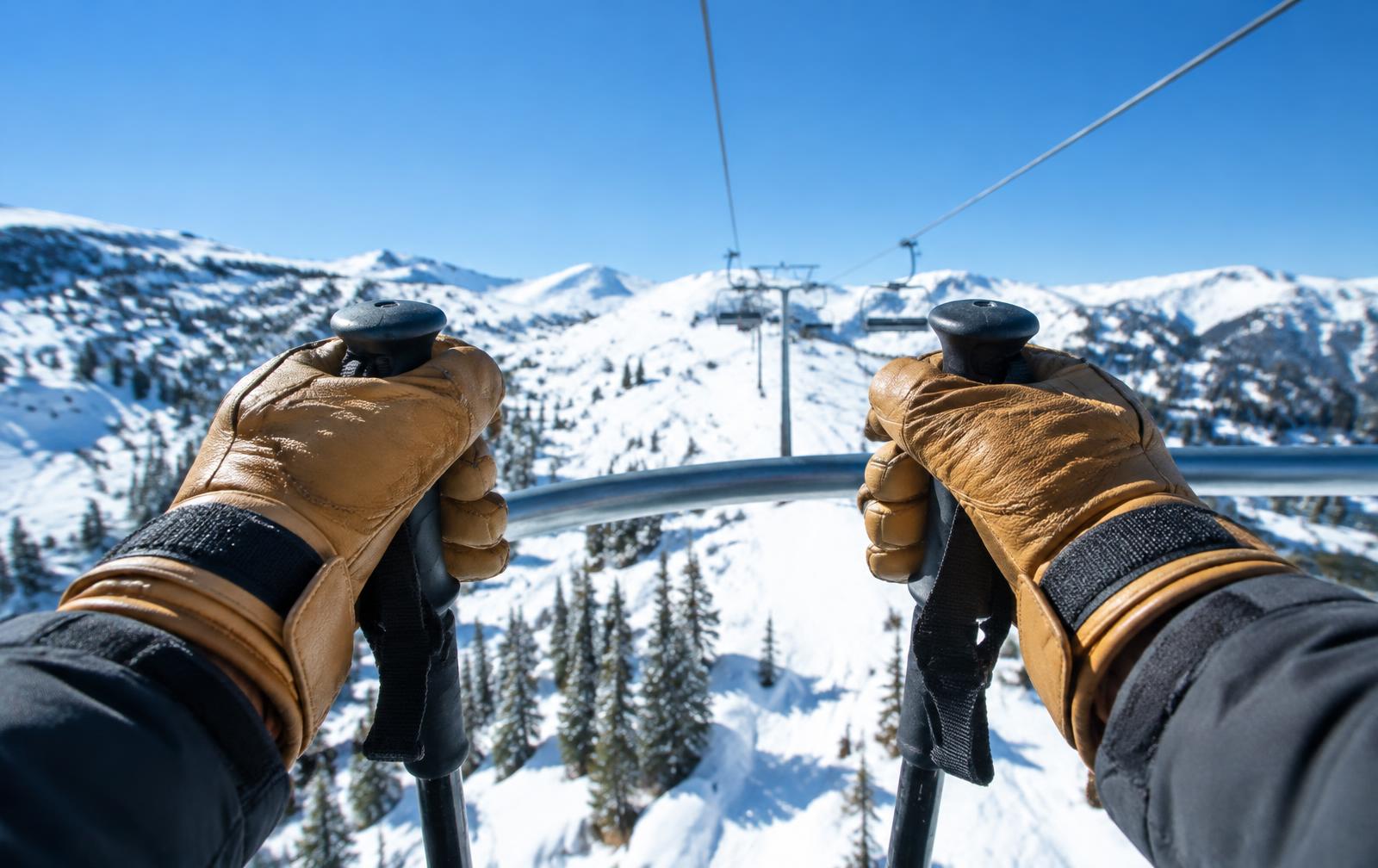
Best Ski Gloves of 2026: Top 10 Non-Heated Gloves and Mittens
Ten currently sold, non-heated ski gloves and mittens compared on published insulation, waterproofing and price — from budget touchscreen gloves to premium leather mitts.
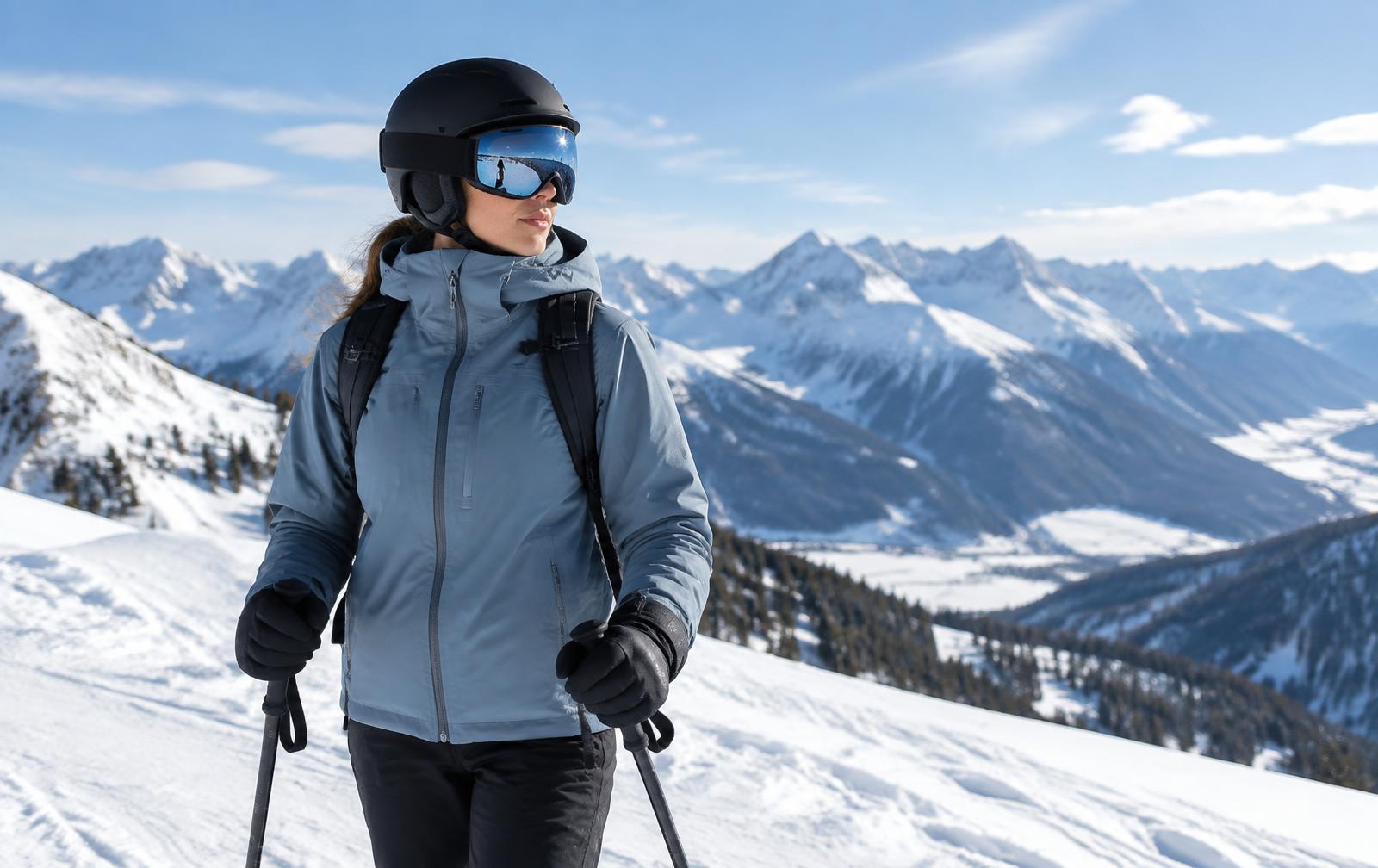
Best Ski Helmets of 2026: Top 10 Helmets for Resort, Backcountry and Budget Skiers
Ten currently sold ski helmets compared on published safety technology, weight, ventilation, fit and price, from premium freeride helmets to a budget MIPS pick.
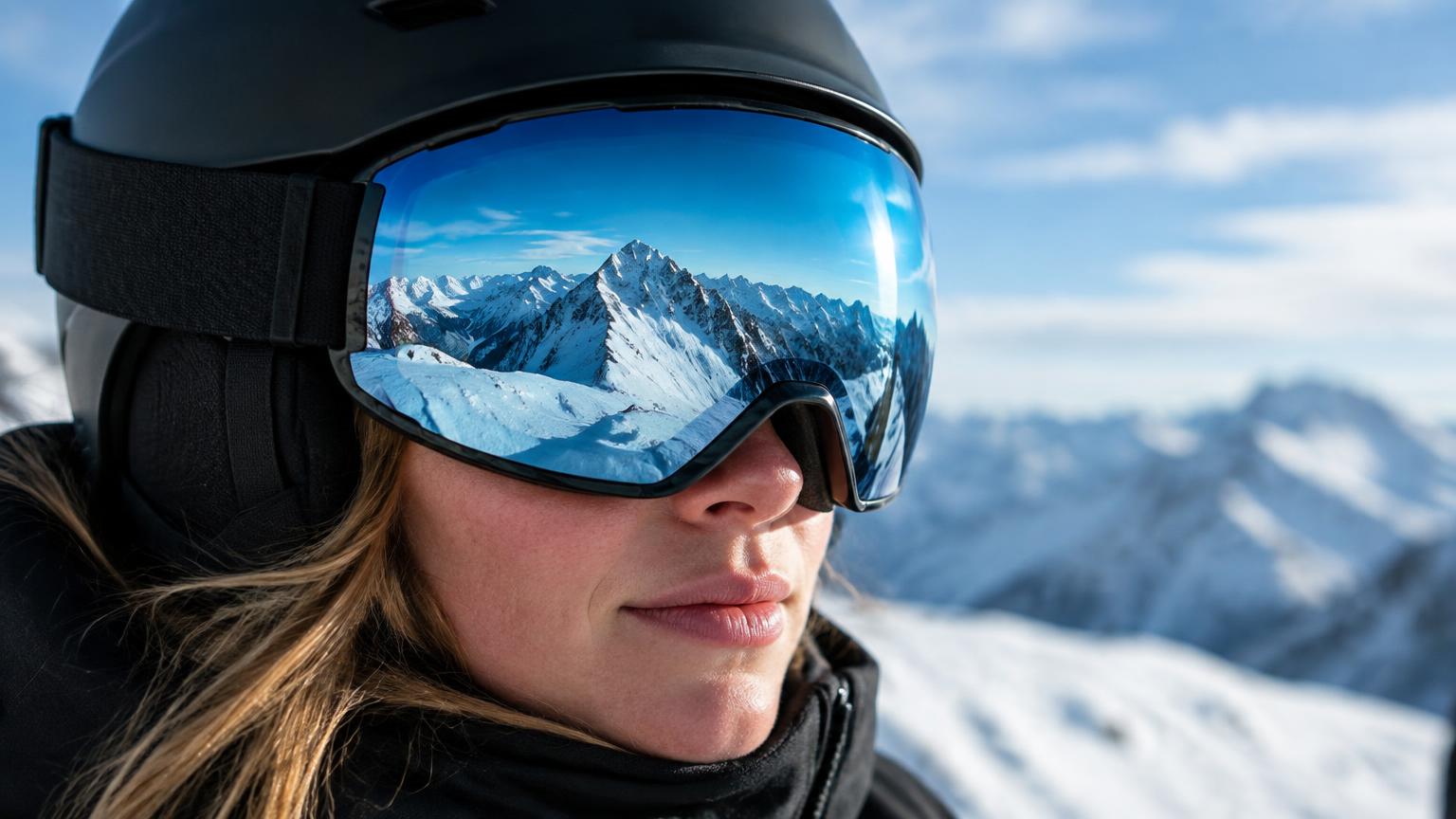
Best Ski Goggles of 2026: Top 10 Goggles for Resort, Backcountry, OTG and Budget Skiers
Ten currently sold ski goggles compared on published lens technology, VLT where brands disclose it, frame style and price, from premium magnetic-lens goggles to a budget interchangeable-lens pick.
One useful email a week
New guides, revisions to existing ones with a note on what changed and why, and price moves worth knowing about. One email a week, unsubscribe anytime.