
Best Portable Power Stations of 2026: Top 10 for Camping and Home Backup
Ten currently sold portable power stations compared on published capacity, output, and price, from grab-and-go units to large expandable home-backup systems.
How this guide was built: Guidevio compiled it from manufacturers' official product pages and specifications. We did not buy, borrow or test any of these power stations, and nothing here is a lab result, a runtime test, or a sponsored placement. Prices are shown only where we saw a stable regular price on an official brand page and can change at any time; several brands here run active promotional or countdown pricing, which is noted separately where it affected our ability to confirm a firm price. All links go straight to the official brand page and earn nothing today.
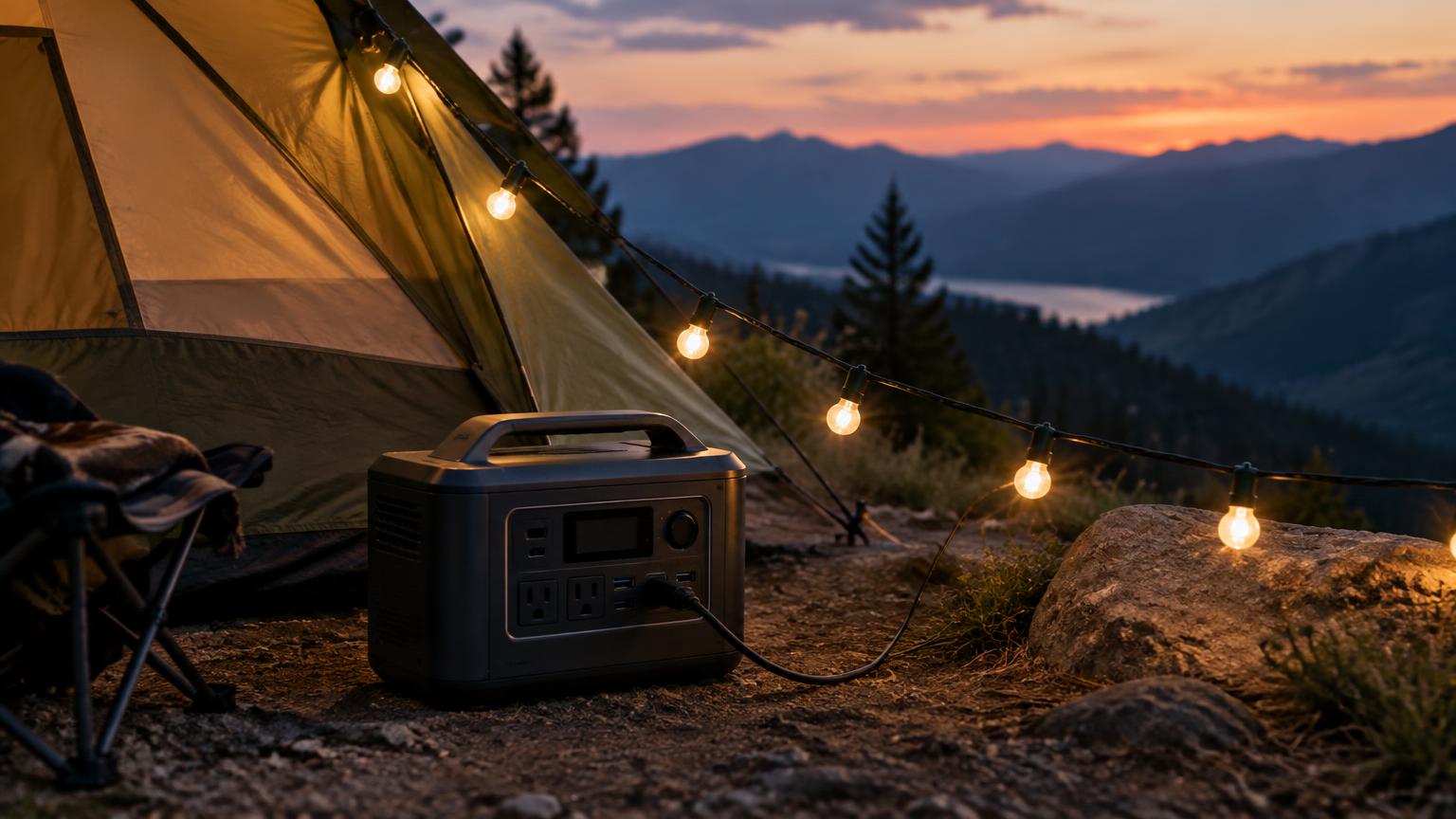
This guide rounds up ten portable power stations that were confirmed for sale on manufacturer sites at the time of research, spanning small grab-and-go units for personal devices to large, expandable systems built for multi-day home backup. Every unit here is a real, named product with a working product page; nothing has been invented, and capacities, output figures and prices are quoted only where a brand publishes them. Where a price wasn't stable or a spec wasn't published, this guide says so rather than guessing.
Capacity (in watt-hours) and AC output (in watts, with surge/peak figures where brands publish them) are the two numbers that matter most for matching a station to a use case, and both are reported here exactly as published on each brand's official site. This guide does not run its own load tests, runtime tests or charging tests — it reports only what each manufacturer states about its own product.
None of these power stations has been tested by Guidevio. This is desk research built from manufacturer product pages. Several brands, including Bluetti, Jackery, and EcoFlow, run active promotional or countdown pricing that made a stable regular price difficult to confirm at the time of research; those cases are flagged clearly in each pick rather than presented as a firm number.
Who this guide is for
- Campers who want a compact station to keep phones, lights, and small devices charged on a trip
- RV and overlanding users who want a mid-to-large capacity station for appliances on the road
- Homeowners who want emergency backup power during outages
- Off-grid or solar setups looking for an expandable power system
- Anyone comparing published capacity, output and price before buying
How we chose
- Only power stations with a live, working page on a manufacturer's site at the time of research were included
- Every URL cited in the underlying research was checked rather than assumed from a search snippet
- Capacity, output and prices are quoted only where a brand states them
- The list spans small, mid-size and large-capacity stations rather than ranking purely by price
- No power station in this guide has been tested, run under load, or evaluated by Guidevio; descriptions are drawn from published product information
- Where a brand's price was unstable or not rendering a firm regular price at the time of research, that is noted rather than an unconfirmed number being presented as fact
Top 10 at a glance
Specifications as published by the manufacturer or the listing we consulted. Scroll sideways on a small screen.
| Pick | Best for | Capacity | AC Output | Price | Official site |
|---|---|---|---|---|---|
| 1. Yeti 300 | Campers and travelers who just need to keep phones, lights and small electronics charged | 297 Wh | 350 W (600 W surge) | $349.95 (regular price, official site) | Visit |
| 2. Yeti 700 | Campers who want more headroom than an entry-level unit, or short home outages | 677 Wh | 600 W (1,000 W surge) | $699.95 (regular price, official site) | Visit |
| 3. AC70 | Weekend campers and small backup needs who want a lightweight all-rounder | 768 Wh | 1,000 W (2,000 W w/ Power Lifting Mode) | $549.00 (listed price, official site) | Visit |
| 4. AC180 | Campers and homeowners wanting partial backup power without going to a large system | 1,152 Wh | 1,800 W (2,700 W w/ Power Lifting Mode) | See current price at Bluetti | Visit |
| 5. Explorer 2000 v2 | Homeowners wanting a single, ready-to-use unit for whole-day emergency backup | 2,042 Wh | 2,200 W (4,400 W surge) | $999.00 (official site) | Visit |
| 6. Explorer 3000 v2 | Off-grid users and homeowners wanting multi-day backup capacity | 3,072 Wh | 3,600 W (7,200 W peak) | See current price at Jackery | Visit |
| 7. Delta 3 1500 | Buyers wanting one station that works for both camping trips and home use | Not published | 1,800 W (2,200 W, 3,600 W surge) | See current price at EcoFlow | Visit |
| 8. Delta Pro 3 | Homeowners wanting a scalable, whole-home backup system | 4-48 kWh (expandable) | 4,000 W (up to 6,000 W with X-Boost) | See current price at EcoFlow | Visit |
| 9. SOLIX C300 | Travelers and light campers who want the most portable option on this list | 288 Wh | 300 W (600 W surge) | See current price at Anker | Visit |
| 10. SOLIX F2000 | RV owners and homeowners wanting an expandable, mid-to-large capacity system | 2,048 Wh (expandable to 4,096 Wh) | 2,400 W (up to 3,600 W surge) | See current price at Anker | Visit |
The ten picks in detail
Yeti 300
Goal Zero
We only show official or licensed product photography. None is on file for this one yet — see the maker's page for photos.
Open product pageYeti 300
The most affordable, most compact station on this list, built for personal devices
A compact, entry-level power station from Goal Zero aimed at personal devices and short trips.
Why it is on this list: It's Goal Zero's entry-level Yeti model, giving budget-focused campers a confirmed-price, compact option.
Key features
- 297 Wh capacity
- 350 W AC output (600 W surge)
- Compact, grab-and-go form factor, per Goal Zero
- Capacity: 297 Wh
- AC Output: 350 W (600 W surge)
- Pros
- Compact, entry-level size suited to personal devices
- Confirmed regular price on Goal Zero's official site
- Lowest capacity on this list, matching its lower price
- Cons
- 297 Wh capacity is only enough for small devices, not appliances
- Goal Zero's product page for this model links through its Yeti 700 listing; the Yeti 300 is detailed on a separate comparison page
- 600 W surge output is modest compared to larger picks on this list
Before you buy: This is a small-capacity unit best suited to phones, lights and small electronics rather than appliances or home backup. Its product detail is presented alongside the Yeti 500 and 700 on Goal Zero's comparison page.
Yeti 700
Goal Zero
We only show official or licensed product photography. None is on file for this one yet — see the maker's page for photos.
Open product pageYeti 700
A rugged mid-capacity station built for camping and short outages
A rugged, mid-capacity power station from Goal Zero built for camping trips and short home outages.
Why it is on this list: It's Goal Zero's mid-size Yeti model, with a confirmed price and a step up in capacity and output from the Yeti 300.
Key features
- 677 Wh capacity
- 600 W AC output (1,000 W surge)
- Rugged build, per Goal Zero's product page
- Capacity: 677 Wh
- AC Output: 600 W (1,000 W surge)
- Pros
- Confirmed regular price on Goal Zero's official site
- Mid-size 677 Wh capacity suits both camping and short outages
- 1,000 W surge output covers more devices than the smaller Yeti 300
- Cons
- Not large enough for multi-day home backup
- Nearly double the price of the Yeti 300
- 600 W continuous AC output is modest next to larger stations on this list
Before you buy: Suited to camping and short home outages rather than multi-day backup or large appliances.
AC70
Bluetti
We only show official or licensed product photography. None is on file for this one yet — see the maker's page for photos.
Open product pageAC70
A lightweight, weekend-trip-sized station with Power Lifting Mode for higher surge output
A lightweight Bluetti power station sized for weekend camping trips and small backup needs.
Why it is on this list: It's Bluetti's compact all-rounder, with a confirmed listed price and higher output than the entry-level Goal Zero picks above.
Key features
- 768 Wh capacity
- 1,000 W AC output (2,000 W with Power Lifting Mode)
- Capacity: 768 Wh
- AC Output: 1,000 W (2,000 W with Power Lifting Mode)
- Pros
- 768 Wh capacity in a lightweight, all-rounder package
- 1,000 W AC output, up to 2,000 W with Power Lifting Mode
- Listed price confirmed on Bluetti's official site
- Cons
- Bluetti describes this as a 'listed price,' which may differ from an ongoing promotional price
- Not sized for large appliances or multi-day home backup
- Confirm current pricing directly with Bluetti before buying
Before you buy: Bluetti lists this as a 'listed price' rather than a fixed MSRP; confirm current pricing before buying.
AC180
Bluetti
We only show official or licensed product photography. None is on file for this one yet — see the maker's page for photos.
Open product pageAC180
A mid-capacity station with strong surge output for partial home backup
A higher-output Bluetti station suited to camping and partial home backup, with a price that fluctuates via promotional countdown pricing on the official site.
Why it is on this list: It's Bluetti's mid-capacity step up from the AC70, offering higher output for camping or partial home backup.
Key features
- 1,152 Wh capacity
- 1,800 W AC output (2,700 W with Power Lifting Mode)
- Capacity: 1,152 Wh
- AC Output: 1,800 W (2,700 W with Power Lifting Mode)
- Pros
- 1,152 Wh capacity and 1,800 W AC output suit partial home backup
- 2,700 W surge output with Power Lifting Mode
- Meaningful step up in capacity from the AC70
- Cons
- Price is unconfirmed; Bluetti's official site uses promotional countdown pricing that fluctuates
- Not large enough for whole-home backup
- Confirm the actual price at checkout before buying
Before you buy: Bluetti's official site price fluctuates with promotional countdown pricing; the regular price could not be confirmed at time of research.
Explorer 2000 v2
Jackery
We only show official or licensed product photography. None is on file for this one yet — see the maker's page for photos.
Open product pageExplorer 2000 v2
A confirmed-price 2 kWh station with fast UPS switching for home backup
A roughly 2 kWh Jackery station positioned for whole-day emergency backup, with fast UPS switching described on Jackery's official page.
Why it is on this list: With a confirmed price, a 2 kWh capacity, and fast UPS switching for backup scenarios, it's positioned by Jackery as a strong all-around home-backup pick.
Key features
- 2,042 Wh capacity
- 2,200 W AC output (4,400 W surge)
- Fast UPS switching, per Jackery
- Capacity: 2,042 Wh
- AC Output: 2,200 W (4,400 W surge)
- Pros
- 2,042 Wh capacity supports whole-day emergency backup
- 2,200 W AC output (4,400 W surge) covers most home appliances
- Confirmed regular price on Jackery's official site
- Fast UPS switching, per Jackery's product page
- Cons
- Priced at $999, a significant step up from the camping-focused picks above
- Large and heavy compared to compact camping units
- Not expandable to the same degree as some large EcoFlow or Anker systems
Before you buy: This is a larger, heavier unit better suited to home backup or vehicle-based use than lightweight backpacking or hiking trips.
Explorer 3000 v2
Jackery
We only show official or licensed product photography. None is on file for this one yet — see the maker's page for photos.
Open product pageExplorer 3000 v2
A large-capacity station built for multi-day backup or off-grid use
A larger Jackery station intended for multi-day home backup or off-grid use, though the US site did not render a stable regular price at time of research.
Why it is on this list: It's Jackery's larger-capacity model for buyers who need more than the Explorer 2000 v2 provides, though its price wasn't stable enough to confirm.
Key features
- 3,072 Wh capacity
- 3,600 W AC output (7,200 W peak)
- Capacity: 3,072 Wh
- AC Output: 3,600 W (7,200 W peak)
- Pros
- 3,072 Wh capacity suits multi-day backup or off-grid use
- 3,600 W AC output with 7,200 W peak covers large appliances
- Positioned by Jackery as a step above the Explorer 2000 v2 for bigger power needs
- Cons
- Price is unconfirmed; the US site did not render a stable regular price at time of review
- Large size and weight make it impractical for backpacking or lightweight camping
- Confirm the current price directly with Jackery before buying
Before you buy: Price could not be confirmed on Jackery's US site at time of research; check current pricing before buying.
Delta 3 1500
EcoFlow
We only show official or licensed product photography. None is on file for this one yet — see the maker's page for photos.
Open product pageDelta 3 1500
A hybrid camping/home station with multiple fast-charging methods
A mid-size EcoFlow station in the Delta 3 1500 series, offering multiple fast-charging methods for both indoor and outdoor use, though its official-site price was not stable at time of research.
Why it is on this list: It's EcoFlow's mid-size hybrid pick with strong published AC output and fast-charging options, even though its capacity and price weren't fully confirmable.
Key features
- 1,800 W AC output (2,200 W, 3,600 W surge with X-Boost)
- Multiple fast-charging methods, per EcoFlow
- Capacity: Not published beyond '1500' series name
- AC Output: 1,800 W (2,200 W, 3,600 W surge with X-Boost)
- Pros
- 1,800 W AC output (2,200 W, 3,600 W surge with X-Boost) supports many appliances
- Multiple fast-charging methods, per EcoFlow's product page
- Positioned for both indoor and outdoor use
- Cons
- EcoFlow's listing did not publish an exact watt-hour capacity beyond the '1500' series name
- Price is unconfirmed; the official site price was not stable/renderable at time of review
- Confirm both capacity and price directly with EcoFlow before buying
Before you buy: Capacity beyond the '1500' series name was not published on this listing, and price was not stable/renderable at time of research; confirm both with EcoFlow before buying.
Delta Pro 3
EcoFlow
We only show official or licensed product photography. None is on file for this one yet — see the maker's page for photos.
Open product pageDelta Pro 3
An expandable 4-48 kWh system built for extended home backup
An expandable EcoFlow system designed for extended home backup, scaling from 4 kWh up to 48 kWh, though its official-site price was not stable at time of research.
Why it is on this list: It's EcoFlow's largest, most expandable system on this list, aimed squarely at whole-home backup rather than portable camping use.
Key features
- Expandable from 4 kWh to 48 kWh
- 4,000 W AC output (up to 6,000 W with X-Boost)
- Capacity: 4-48 kWh (expandable)
- AC Output: 4,000 W (up to 6,000 W with X-Boost)
- Pros
- Expandable from 4 kWh up to 48 kWh to match large home-backup needs
- 4,000 W AC output, up to 6,000 W with X-Boost
- Designed specifically for extended home backup, per EcoFlow
- Cons
- Price is unconfirmed; the official site price was not stable/renderable at time of review
- A large, expandable system like this represents a significant investment and installation consideration
- Not a portable, grab-and-go camping unit
Before you buy: Price was not stable/renderable on EcoFlow's official site at time of research; confirm current pricing before buying. This is a large system best suited to home installation rather than portable camping.
SOLIX C300
Anker
We only show official or licensed product photography. None is on file for this one yet — see the maker's page for photos.
Open product pageSOLIX C300
A small, travel-friendly station for phones, laptops and light camping gear
A small, travel-friendly Anker power station for phones, laptops, and light camping gear, though it was listed as sold out with no stable regular price on the official US page at time of research.
Why it is on this list: It's Anker's most ultra-portable station on this list, aimed at travel and light camping, even though it was listed as sold out at time of research.
Key features
- 288 Wh capacity
- 300 W AC output (600 W surge)
- Capacity: 288 Wh
- AC Output: 300 W (600 W surge)
- Pros
- 288 Wh capacity in a small, travel-friendly form factor
- 300 W AC output (600 W surge) suits phones and laptops
- Aimed specifically at light camping and travel use, per Anker
- Cons
- Listed as Sold Out on the official US page at time of research, with no stable regular price
- Smallest capacity among the mid-to-large picks on this list
- Confirm current availability and price directly with Anker before buying
Before you buy: Listed as Sold Out on Anker's official US page at time of research, with no stable regular price; confirm current availability before planning a purchase.
SOLIX F2000
Anker
We only show official or licensed product photography. None is on file for this one yet — see the maker's page for photos.
Open product pageSOLIX F2000
An expandable 2 kWh-class station aimed at RV and home-backup use
A 2 kWh-class Anker station expandable to 4,096 Wh, aimed at RV and home-backup use, though the official US price was not stable/renderable at time of research.
Why it is on this list: It rounds out this list as Anker's versatile mid/large option, expandable for buyers whose power needs grow over time.
Key features
- 2,048 Wh capacity (expandable to 4,096 Wh)
- 2,400 W AC output (up to 3,600 W surge)
- Capacity: 2,048 Wh (expandable to 4,096 Wh)
- AC Output: 2,400 W (up to 3,600 W surge)
- Pros
- 2,048 Wh capacity, expandable to 4,096 Wh for growing power needs
- 2,400 W AC output (up to 3,600 W surge) suits RV and home-backup appliances
- Aimed specifically at RV and home-backup use, per Anker
- Cons
- Price is unconfirmed; the official US price was not stable/renderable at time of review
- Larger and heavier than Anker's own ultra-portable SOLIX C300
- Confirm current pricing directly with Anker before buying
Before you buy: Price was not stable/renderable on Anker's official US site at time of research; confirm current pricing before buying.
How the top picks actually differ
Capacity: matching watt-hours to your use case
Capacity ranges from the Anker SOLIX C300's 288 Wh and Goal Zero Yeti 300's 297 Wh, both aimed at phones and small electronics, up through camping-focused mid-size units like the Goal Zero Yeti 700 (677 Wh) and Bluetti AC70/AC180 (768 Wh and 1,152 Wh), to home-backup-focused units like the Jackery Explorer 2000 v2 (2,042 Wh) and Explorer 3000 v2 (3,072 Wh), and finally the EcoFlow Delta Pro 3, which is expandable from 4 kWh to 48 kWh for whole-home backup.
AC output and surge power
Continuous AC output and surge/peak figures, as published by each brand, indicate how many and what type of devices a station can run at once. Smaller units like the Goal Zero Yeti 300 (350 W, 600 W surge) suit small electronics, while larger units like the Jackery Explorer 3000 v2 (3,600 W, 7,200 W peak) and EcoFlow Delta Pro 3 (4,000 W, up to 6,000 W with X-Boost) are built to run larger home appliances.
Price confirmation varies by brand
Goal Zero and Jackery's Explorer 2000 v2 had confirmed, stable regular prices at time of research. Bluetti's AC180, Jackery's Explorer 3000 v2, both EcoFlow picks, and both Anker SOLIX picks did not have a stable regular price confirmable on their official US pages at time of research, due to promotional/countdown pricing, unstable page rendering, or sold-out status; this guide flags each of those cases rather than presenting an unconfirmed number as fact.
Who should choose what
You want the most affordable, most compact option
Yeti 300
You want a rugged camping station with more headroom
Yeti 700
You want a lightweight all-rounder for weekend trips
AC70
You want more output for partial home backup
AC180
You want a confirmed-price, ready-to-use home-backup unit
Explorer 2000 v2
You need multi-day backup or off-grid capacity
Explorer 3000 v2
You want one station for both camping and home use
Delta 3 1500
You want a scalable whole-home backup system
Delta Pro 3
You want the most ultra-portable option for travel
SOLIX C300
You want an expandable RV or home-backup system
SOLIX F2000
Common questions
- How much capacity do I actually need in a portable power station?
- It depends on your use case: small units like the Goal Zero Yeti 300 (297 Wh) or Anker SOLIX C300 (288 Wh) suit phones and small electronics, mid-size units like the Bluetti AC70 (768 Wh) or Goal Zero Yeti 700 (677 Wh) suit camping trips, and larger units like the Jackery Explorer 2000 v2 (2,042 Wh) or EcoFlow Delta Pro 3 (expandable to 48 kWh) are built for home backup. This guide reports only published capacity figures and doesn't run its own runtime tests.
- Why do some prices in this guide say 'See current price' instead of a dollar figure?
- Several brands in this guide — including Bluetti's AC180, Jackery's Explorer 3000 v2, both EcoFlow picks, and both Anker SOLIX picks — did not have a stable regular price that could be confirmed on their official US site at time of research, due to promotional countdown pricing, unstable page rendering, or sold-out status. Rather than guess, this guide directs readers to check current pricing directly with the brand.
- What's the difference between AC output and surge/peak wattage?
- Continuous AC output is how much power a station can sustain, while surge or peak wattage (sometimes boosted with features like Bluetti's Power Lifting Mode or EcoFlow's X-Boost) is a brief higher output some appliances need to start up. Both figures in this guide are reported only as published by each brand.
- Which station on this list is best for whole-home backup?
- The EcoFlow Delta Pro 3 is designed as an expandable system, scaling from 4 kWh up to 48 kWh, making it the pick on this list explicitly built for extended, whole-home backup, per EcoFlow's own positioning. Its price was not stable/renderable at time of research.
- Which station on this list is the most portable?
- The Anker SOLIX C300 (288 Wh) and Goal Zero Yeti 300 (297 Wh) are the smallest, most travel-friendly units in this guide, aimed at phones, laptops and light camping gear rather than appliances or home backup.
- Has Guidevio tested any of these power stations?
- No. This guide is built entirely from desk research on manufacturers' official product pages. Guidevio has not purchased, borrowed, or run load/runtime tests on any of these units.
Sources consulted
Official product pages, specification sheets and retailer listings used to compile this guide.
- Goal Zero: Yeti 300 (comparison page) — https://goalzero.com/pages/new-yeti-300-500-700-power-stations
- Goal Zero: Yeti 700 — https://goalzero.com/products/yeti-700-portable-power-station-lfp-batteries
- Bluetti: AC70 — https://www.bluettipower.com/products/ac70
- Bluetti: AC180 — https://www.bluettipower.com/products/ac180
- Jackery: Explorer 2000 v2 — https://www.jackery.com/products/jackery-explorer-2000-v2-portable-power-station
- Jackery: Explorer 3000 v2 — https://www.jackery.com/products/explorer-3000-v2-portable-power-station
- EcoFlow: Delta 3 1500 — https://us.ecoflow.com/products/delta-3-1500-portable-power-station
- EcoFlow: Delta Pro 3 — https://us.ecoflow.com/products/delta-pro-3-solar-generator
- Anker: SOLIX C300 — https://www.ankersolix.com/products/c300
- Anker: SOLIX F2000 — https://www.ankersolix.com/f2000
Related guides

Best Camping Tents of 2026: Top 10 Tents for Car Camping and Backpacking
Ten currently sold tents compared on published capacity, weight and price, spanning budget car-camping domes, family instant tents and ultralight backpacking shelters.
Best Coolers of 2026: Top 10 Hard, Soft and Wheeled Coolers Compared
Ten currently sold coolers spanning rotomolded hard coolers, wheeled marine coolers, a soft cooler and an all-terrain wheeled cooler, compared on published capacity and price.

Best Headlamps of 2026: Top 10 Headlamps for Camping, Hiking and Backpacking
Ten currently sold headlamps compared on published lumens, runtime, rechargeability and price, spanning ultralight backpacking lamps to rugged rechargeable all-rounders.

Best Camping Chairs of 2026: Top 10 Chairs for Car Camping, Backpacking and the Backyard
Ten currently sold camping chairs spanning ultralight packable frames, rockers, loveseats and heavy-duty quad chairs, compared on published weight, capacity and price.

Best Camping Lanterns of 2026: Rechargeable, Battery, and Solar Picks
Ten currently sold camping lanterns across rechargeable, battery, and solar power types, compared on published lumens, runtime, and price from official brand websites.

Best Camping Stoves (2026): Top 10 Backpacking Canister Stoves & Two-Burner Car-Camping Stoves
Ten currently sold camping stoves compared on published price, weight, output and boil time, spanning ultralight backpacking canister stoves to two-burner car-camping stoves.
One useful email a week
New guides, revisions to existing ones with a note on what changed and why, and price moves worth knowing about. One email a week, unsubscribe anytime.