Snowboard Size Chart: How to Choose Length, Width, and Board Type
Ten sizing references pulled directly from Burton, Jones and Lib Tech's own published charts and guides — weight-to-length tables, boot-to-width rules, and board profile/shape terminology — so you can size a board using each brand's own data.
How this guide was built: Guidevio compiled it from Burton, Jones Snowboards, Lib Tech and Nidecker's own published size charts and guides, and from evo/Tactics pages that republish brand-sourced specification data. No boards were tested or ridden by Guidevio as part of building it. Sizing details, model availability and specific chart values can change season to season; always check the official brand chart for the exact model you're buying before purchasing.
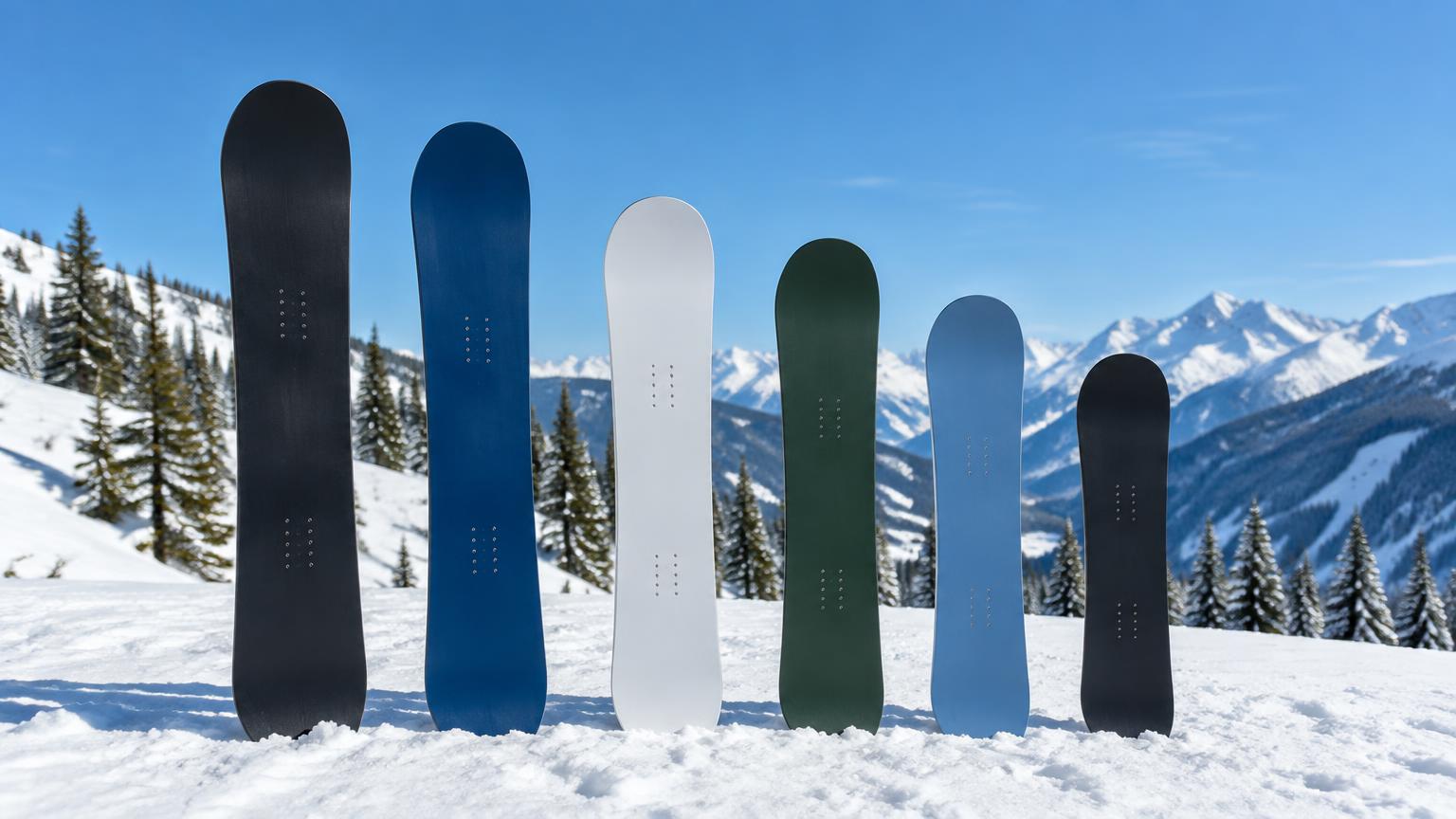
Snowboard manufacturers size boards primarily by rider weight, not height, and every brand publishes its own model-specific chart rather than one universal formula. This guide pulls together ten concrete sizing references — drawn directly from Burton, Jones and Lib Tech's own charts and guides, plus Nidecker's shape glossary — so a rider can see exactly what each brand publishes before checking the chart for the specific board they're buying.
The figures below include sample weight-to-length tables for one model from each of three brands, the boot-size-to-width relationship each brand documents, and the industry-standard terminology brands use for board profile (camber, rocker, flat, hybrid) and shape (directional, twin, asym). Because sizing varies by model even within one brand's lineup, these tables illustrate the type of data brands publish rather than a single number to apply to every board.
What was checked for each entry: the brand's own size chart or buying-guide page where available, plus retailer pages (evo, Tactics) that republish brand-sourced specification data where a brand's own page didn't show the full table. Anything not stated on the source checked is marked 'Not published' rather than estimated.
Who this guide is for
- First-time buyers trying to translate their weight and boot size into a board length and width
- Riders switching brands who want to see how weight ranges shift by model, not just by brand
- Wide-footed riders (roughly US 10.5+) trying to understand when a 'W' wide board is needed
- Riders comparing board profiles (camber, rocker, flat, hybrid) before choosing a type
- Anyone comparing directional, twin and asym shapes before picking a riding style category
How we chose
- Used only figures published directly by Burton, Jones Snowboards, Lib Tech or Nidecker on their own official pages, or by evo/Tactics where they republish brand-sourced specification data
- Included one sample weight-to-length table per brand (Burton Custom, Jones Mountain Twin, Lib Tech Lib Rig) to show how model-specific charts are structured
- Documented the boot-size-to-width relationship exactly as each brand states it, including specific wide-board examples
- Marked any value not found on the sources checked as 'Not published' rather than estimating it
- This is desk research only: no boards were tested or ridden as part of building this guide
Top 10 at a glance
Specifications as published by the manufacturer or the listing we consulted. Scroll sideways on a small screen.
| Pick | Best for | Source type | What it covers | Key figure | Price | Official site |
|---|---|---|---|---|---|---|
| 1. Burton — official size charts (Men's, Women's, Kid's & Toddler's) | Riders who want one brand's full official chart set for boards and matching gear | Official brand chart hub | Boards, boots, bindings, helmets, socks, gloves | Not applicable | Not applicable — reference chart, not a product | Visit |
| 2. Burton Blog — Snowboard Size Chart (weight-based sizing explainer) | Riders who want to understand why weight ranges matter before reading a specific chart | Official brand explainer article | Weight-based sizing logic | Min/max weight range per size | Not applicable — reference article, not a product | Visit |
| 3. Burton Custom (men's, camber) — sample weight-to-length table | Riders comparing a concrete example of how one all-mountain camber board's sizes scale | Retailer-republished brand spec table | Length, waist width, weight, boot size | 150-162W cm, 248-264mm waist | See current price at Burton | Visit |
| 4. Jones Snowboards — official size calculator and guide | Riders who want a guided tool rather than reading a static chart | Official interactive size calculator | Weight, height, boot size, style, level | Beginner: -1-2cm; advanced: mid-point or above | Not applicable — reference tool, not a product | Visit |
| 5. Jones Mountain Twin (men's, all-mountain twin) — sample weight-to-length table | Riders comparing an all-mountain twin example against Burton's and Lib Tech's camber/directional examples | Retailer-republished brand spec table | Length, weight, waist width, boot size | 149-157cm, 244-254mm waist | See current price at Jones Snowboards | Visit |
| 6. Lib Tech Lib Rig (men's, all-mountain directional) — sample sizing table | Riders comparing a directional all-mountain example that sizes by boot fit rather than weight | Retailer-published brand spec table | Length, width category, waist width, boot size | 155-162cm, 25.3-25.7cm waist | See current price at Lib Tech | Visit |
| 7. Boot-size-to-width rule (Burton, Jones, Lib Tech wide 'W' sizing) | Riders with larger boot sizes trying to determine if they need a wide board | Cross-brand published sizing rule | Boot size to waist width / wide board threshold | Roughly US 10.5+ men's triggers a 'W' model | Not applicable — sizing rule, not a product | Visit |
| 8. Burton Rocker Snowboard Guide (board profile terminology) | Riders deciding between camber, rocker, flat or hybrid before choosing a size | Official brand terminology guide | Camber, rocker, flat, hybrid profiles | Not applicable | Not applicable — reference guide, not a product | Visit |
| 9. Nidecker Snowboards Technology (board shape/outline glossary) | Riders deciding between directional, twin and asym shapes before picking a size | Official brand terminology glossary | Board shape/outline categories | Not applicable | Not applicable — reference guide, not a product | Visit |
| 10. Jones terrain-based riding style categories (All-mountain, Freeride, Freestyle, Powder) | Riders who want their intended terrain to shape their size recommendation, not just their weight | Official calculator input category | Terrain-based riding style | 4 categories: All-mountain, Freeride, Freestyle, Powder | Not applicable — reference tool, not a product | Visit |
The ten picks in detail
Burton — official size charts (Men's, Women's, Kid's & Toddler's)
Burton
We only show official or licensed product photography. None is on file for this one yet — see the maker's page for photos.
Open product pageBurton — official size charts (Men's, Women's, Kid's & Toddler's)
Burton's own page groups board, boot, binding, helmet, sock and glove charts by rider category
Burton publishes size charts by category — Men's, Women's, Kid's & Toddler's — covering boards, boots, bindings, helmets, socks and gloves on its own site.
Why it is on this list: This is Burton's primary official sizing resource and the starting point for sizing any Burton board or accessory.
Key features
- Separate charts for Men's, Women's and Kid's & Toddler's
- Covers boards, boots, bindings, helmets, socks and gloves
- Published and maintained directly by Burton
- Publisher: Burton (official)
- Categories covered: Boards, boots, bindings, helmets, socks, gloves
- Rider groups: Men's, Women's, Kid's & Toddler's
- Pros
- Covers boards, boots, bindings, helmets, socks and gloves in one place
- Split by Men's, Women's and Kid's & Toddler's categories
- Published directly on Burton's own site
- Cons
- Not a single universal formula — still model-specific per board
- Reading multiple category pages is needed to size a full kit
Before you buy: Still requires checking the specific model's chart, since ranges vary by board.
Burton Blog — Snowboard Size Chart (weight-based sizing explainer)
Burton
We only show official or licensed product photography. None is on file for this one yet — see the maker's page for photos.
Open product pageBurton Blog — Snowboard Size Chart (weight-based sizing explainer)
Burton states riding under the weight range makes a board feel stiffer, and over it makes a board feel softer
Burton's blog states that every snowboard size comes with a recommended min and max weight, usually noted on the topsheet sticker, and that riding under or over that range makes a board feel stiffer or softer than intended.
Why it is on this list: This is Burton's own explanation of how its weight ranges work and why they matter more than height.
Key features
- Explains the min/max weight range printed on a board's topsheet
- Covers the effect of riding under or over the recommended range
- Also links to Burton's waist-width and boot-fit guidance
- Publisher: Burton (official blog)
- Primary sizing input: Rider weight
- Secondary factor discussed: Waist width vs. boot size
- Pros
- Explains why weight, not height, is the primary sizing input
- Describes the effect of riding above or below the recommended weight range
- Written and published directly by Burton
- Cons
- Explainer only — does not include a universal size table
- Still requires checking the specific model's own weight range
Before you buy: Doesn't replace checking the exact model's own published chart.
Burton Custom (men's, camber) — sample weight-to-length table
Burton
We only show official or licensed product photography. None is on file for this one yet — see the maker's page for photos.
Open product pageBurton Custom (men's, camber) — sample weight-to-length table
150cm (248mm waist) fits 120-180 lbs; 162W (264mm waist) fits 180-260+ lbs, per evo's Burton chart
As republished by evo from Burton's own specification data, the Custom's chart lists six sizes from 150cm to 162W, with waist widths from 248mm to 264mm and weight ranges from 120-180 lbs up to 180-260+ lbs.
Why it is on this list: This model illustrates exactly how a published brand chart pairs length, waist width, weight range and boot size.
Key features
- 150cm / 248mm waist / 120-180 lbs / boot 7-9.5
- 156cm / 252mm waist / 150-200 lbs / boot 8.5-10.5
- 162cm / 256mm waist / 180-260+ lbs / boot 9.5-11.5
- 162W / 264mm waist / 180-260+ lbs / boot 10.5+
- Size range: 150cm-162W
- Waist width range: 248mm-264mm
- Weight range: 120-180 lbs to 180-260+ lbs
- Pros
- Full size run from 150cm to 162W, including a wide option
- Includes matching boot-size recommendation per size
- Sourced from Burton's own product specification data
- Cons
- Figures apply to this specific model only, not Burton's full lineup
- Camber-specific — other Burton profiles size differently
Before you buy: Weight ranges are model-specific and should not be generalized to other Burton boards.
Jones Snowboards — official size calculator and guide
Jones Snowboards
We only show official or licensed product photography. None is on file for this one yet — see the maker's page for photos.
Open product pageJones Snowboards — official size calculator and guide
Jones states beginners often choose boards 1-2cm shorter than the recommended range
Jones's official calculator identifies weight as the key sizing factor and also factors in height, boot size, riding style and rider level; its guidance notes beginners often size 1-2cm shorter and advanced riders size at or above the range midpoint.
Why it is on this list: Jones's calculator and guidance page is the most detailed rider-level-adjusted sizing tool among the three brands checked.
Key features
- Weight identified as the key sizing factor
- Height, boot size, riding style and rider level as secondary inputs
- Riding style categories: All-mountain, Freeride, Freestyle, Powder
- Explicit beginner and advanced sizing adjustment guidance
- Publisher: Jones Snowboards (official)
- Primary input: Rider weight
- Additional inputs: Height, boot size, riding style, rider level
- Pros
- Combines weight, height, boot size, riding style and rider level
- Publishes explicit guidance for beginner vs. advanced sizing adjustments
- Built from rider data refined by Jones's own engineers and team riders
- Cons
- Calculator output still needs checking against the specific model's chart
- Requires entering several inputs rather than reading a single table
Before you buy: Still requires checking the exact model's own chart for final sizing.
Jones Mountain Twin (men's, all-mountain twin) — sample weight-to-length table
Jones Snowboards
We only show official or licensed product photography. None is on file for this one yet — see the maker's page for photos.
Open product pageJones Mountain Twin (men's, all-mountain twin) — sample weight-to-length table
149cm (244mm waist) fits 110-160 lbs; 157cm (254mm waist) fits 130-180 lbs, per evo's Jones chart
As republished by evo from Jones's own specification data, the Mountain Twin's chart lists four sizes from 149cm to 157cm, with weight ranges from 110-160 lbs up to 130-180 lbs and waist widths from 244mm to 254mm.
Why it is on this list: This model gives a second brand's concrete example of how length, weight and waist width scale together.
Key features
- 149cm / 244mm waist / 110-160 lbs / boot 7-9
- 151cm / 248mm waist / 110-160 lbs / boot 7-9
- 154cm / 251mm waist / 120-170 lbs / boot 7-9
- 157cm / 254mm waist / 130-180 lbs / boot 9.5-11
- Size range: 149cm-157cm
- Waist width range: 244mm-254mm
- Weight range: 110-160 lbs to 130-180 lbs
- Pros
- Compact four-size run makes the weight/length relationship easy to read
- Includes matching boot-size recommendation per size
- Sourced from Jones's own product specification data
- Cons
- Figures apply to this specific model only, not Jones's full lineup
- All-mountain twin shape sizes differently than freeride or powder shapes
Before you buy: Weight ranges are model-specific and should not be generalized to other Jones boards.
Lib Tech Lib Rig (men's, all-mountain directional) — sample sizing table
Lib Tech
We only show official or licensed product photography. None is on file for this one yet — see the maker's page for photos.
Open product pageLib Tech Lib Rig (men's, all-mountain directional) — sample sizing table
155cm (25.3cm waist, Standard) suits boot 10.5 and under; 162cm (25.7cm waist, Mid-Wide) suits boot 11.5 and under
As published on Tactics's official brand size-chart page from Lib Tech's product data, the Lib Rig's chart lists four sizes from 155cm to 162cm, with waist widths from 25.3cm to 25.7cm and suggested boot sizes up to 11.5 and under.
Why it is on this list: This model shows how Lib Tech documents width and boot fit per size on its own product pages, without a single combined brand-wide weight chart.
Key features
- 155cm / Standard / 25.3cm waist / boot 10.5 and under
- 157cm / Mid-Wide / 25.5cm waist / boot 11 and under
- 159cm / Mid-Wide / 25.5cm waist / boot 11 and under
- 162cm / Mid-Wide / 25.7cm waist / boot 11.5 and under
- Size range: 155cm-162cm
- Waist width range: 25.3cm-25.7cm
- Weight range: Not published
- Pros
- Includes a width-category label (Standard vs. Mid-Wide) per size
- Includes matching suggested boot size per size
- Sourced from Lib Tech's own product specification data
- Cons
- No published rider-weight range for this table, unlike Burton's and Jones's charts
- Figures apply to this specific model only, not Lib Tech's full lineup
Before you buy: Not published: a single combined Lib Tech weight-range chart across all models was not found on Lib Tech's own site; weight suitability is set per board profile and shape rather than one brand-wide chart.
Boot-size-to-width rule (Burton, Jones, Lib Tech wide 'W' sizing)
Burton, Jones, Lib Tech
We only show official or licensed product photography. None is on file for this one yet — see the maker's page for photos.
Open product pageBoot-size-to-width rule (Burton, Jones, Lib Tech wide 'W' sizing)
Jones Hovercraft 2.0 size 156 wide (26.3cm waist) is listed for boot size 13 and under
All three brands publish wide ('W') versions of standard board models for larger boot sizes, commonly cited around US 10.5+ men's, with specific examples like the Burton 154W (258mm waist, boot 9.5-11.5+) and Lib Tech Dynamo C3 165W (26.8cm waist, boot 14 and under).
Why it is on this list: Toe/heel drag and edge-to-edge control both depend on this boot-to-width relationship, and all three brands document it with concrete wide-model examples.
Key features
- Burton Custom 154 (250mm waist, boot 7-9.5) vs. 154W (258mm waist, boot 9.5-11.5+)
- Jones Hovercraft 2.0 156 wide (26.3cm waist, boot 13 and under)
- Lib Tech Dynamo C3 165W (26.8cm waist, boot 14 and under)
- General rule: larger boot sizes (roughly US 10.5+) are directed to 'W' models
- Typical wide threshold: Roughly US 10.5+ men's
- Naming convention: 'W' suffix across all three brands
- Example widest boot fit: US 14 and under (Lib Tech Dynamo C3 165W)
- Pros
- Clear published threshold (roughly US 10.5+) for when to consider a wide board
- Consistent 'W' naming convention across all three brands
- Backed by specific model examples from each brand's own chart
- Cons
- Exact threshold can vary slightly by specific model and brand
- Requires checking the individual model's chart rather than a single universal cutoff
Before you buy: Always check the exact model's own chart, since the wide-sizing threshold varies by board.
Burton Rocker Snowboard Guide (board profile terminology)
Burton
We only show official or licensed product photography. None is on file for this one yet — see the maker's page for photos.
Open product pageBurton Rocker Snowboard Guide (board profile terminology)
Burton describes rocker as developed after camber for a more forgiving, catch-free feel and better powder float
Burton's official Rocker Snowboard Guide traces flat bases as the earliest snowboard design, camber as later added for edge contact and hardpack performance, and rocker as developed afterward for a more forgiving, catch-free feel and powder float.
Why it is on this list: This is Burton's own reference for the profile terminology used across every brand's size chart and product page.
Key features
- Camber: upward arc, contact near tip/tail, longer effective edge, strong edge hold
- Rocker: reversed arc, forgiving and catch-free, improved powder float
- Flat: no camber/rocker arc, earliest design, valued for maneuverability in deep snow
- Hybrid: combines camber and rocker sections to blend characteristics
- Publisher: Burton (official)
- Profiles covered: Camber, rocker, flat, hybrid
- Related source: Tactics — Snowboard Camber Profiles Explained
- Pros
- Explains the history and purpose of each profile type
- Directly published by Burton rather than a third party
- Also referenced by Tactics's own profile guide for hybrid terminology
- Cons
- Terminology only — does not include a sizing table
- Some hybrid profile detail is documented by Tactics rather than Burton directly
Before you buy: Profile choice affects ride feel independently of length and width sizing.
Nidecker Snowboards Technology (board shape/outline glossary)
Nidecker
We only show official or licensed product photography. None is on file for this one yet — see the maker's page for photos.
Open product pageNidecker Snowboards Technology (board shape/outline glossary)
True Twin boards have mirror-image nose and tail for identical performance forward or switch
Nidecker's official technology page defines the four standard industry outline categories: Directional, Directional Twin, True Twin, and Directional Asym / Asym Twin, each tied to a specific riding intent.
Why it is on this list: Nidecker's page is the clearest single-source definition of the outline categories used across the industry's charts and product listings.
Key features
- Directional: longer nose, built for powder float, glide and stability
- Directional Twin: slightly longer nose, allows switch riding with extra float
- True Twin: mirror-image nose/tail, identical forward or switch
- Directional Asym / Asym Twin: tighter heel-edge sidecut, stance-specific versions
- Publisher: Nidecker (official)
- Shapes covered: Directional, Directional Twin, True Twin, Asym
- Related example: Lib Tech labels the Lib Rig 'All Mountain - Directional'
- Pros
- Covers all four standard shape categories in one official reference
- Explains the riding intent behind each shape (powder, switch riding, turning balance)
- Published directly by a snowboard manufacturer
- Cons
- Terminology only — does not include a sizing table
- Does not cover terrain-based style categories (that's Jones's calculator)
Before you buy: Shape affects riding style fit independently of the length/weight sizing tables.
Jones terrain-based riding style categories (All-mountain, Freeride, Freestyle, Powder)
Jones Snowboards
We only show official or licensed product photography. None is on file for this one yet — see the maker's page for photos.
Open product pageJones terrain-based riding style categories (All-mountain, Freeride, Freestyle, Powder)
Lib Tech labels the Lib Rig 'ALL MOUNTAIN - DIRECTIONAL' directly on its own product page
Jones's official size calculator has riders select a riding style category — All-mountain, Freeride, Freestyle, or Powder — as part of generating a size recommendation, and brands publish matching terrain/style labels directly on product pages.
Why it is on this list: This is the clearest official example of terrain/style being used as a direct input into a sizing recommendation, rather than as separate marketing copy.
Key features
- All-mountain, Freeride, Freestyle and Powder style options
- Style selection combines with weight, height, boot size and rider level
- Matching terrain/style labels appear directly on brand product pages
- Publisher: Jones Snowboards (official)
- Style categories: All-mountain, Freeride, Freestyle, Powder
- Example product label: Lib Tech Lib Rig: 'All Mountain - Directional'
- Pros
- Four clearly defined riding style categories built into an official tool
- Style selection feeds directly into the size recommendation output
- Matches how brands label individual models on their own product pages
- Cons
- Category definitions themselves are not spelled out in detail on the calculator page
- Still requires combining style with weight, height and boot size for a final size
Before you buy: Not published: specific length adjustment amounts per style category were not shown on the pages checked.
How the top picks actually differ
Weight is the primary sizing input, not height
Burton states that every snowboard size comes with a recommended min and max weight, usually printed on the topsheet sticker, and that riding under the range can make a board feel stiffer while riding over it can make it feel softer than intended. Jones similarly identifies weight as 'the key sizing factor,' with height, boot size, riding style and rider level as secondary inputs in its official calculator. Within a weight range, Jones notes a slightly longer board increases stability, float and edge hold, while a shorter board is quicker and more playful; beginners often size 1-2cm shorter than the recommended range, while advanced riders often size at or slightly above the range's midpoint.
Waist width is set by boot size, not by height or weight
Burton explains that boot size determines binding size, and the relationship between binding and board waist width determines edge-to-edge control and toe/heel drag: too wide a waist makes it harder to go edge to edge, while too narrow a waist causes toe and heel drag. Riders with larger boot sizes — commonly cited around US 10.5+ men's — are directed toward a 'W' (wide) version of a given model, which has a wider waist at the same or similar length. All three brands checked (Burton, Jones, Lib Tech) offer W-suffix sizes for this reason, with example boot-size-to-width pairings published on their own or retailer-republished charts.
Board profile changes ride feel independently of length
Per Burton's official Rocker Snowboard Guide, flat bases were the earliest snowboard design, valued for maneuverability in deep snow; camber (an upward arc with contact points near the tip and tail) was introduced later to improve edge contact and hardpack performance, giving a longer effective edge and stronger edge hold; rocker (a reversed arc) was developed afterward for a more forgiving, catch-free feel and improved powder float. Hybrid profiles combine camber and rocker sections — for example, camber underfoot with rocker in the tip and tail — to blend those characteristics, per Tactics's brand-sourced profile guide.
Board shape/outline determines riding style fit
Nidecker's official technology page defines four standard outline categories: Directional (nose significantly longer than tail, for powder float and stability), Directional Twin (slightly longer nose, allows switch riding with extra float), True Twin (mirror-image nose and tail for identical forward/switch performance), and Directional Asym / Asym Twin (tighter heel-edge sidecut than toe-edge, produced in stance-specific regular/goofy versions). Brands also label individual models with terrain/style intent directly on product pages, such as Lib Tech's 'All Mountain - Directional' label on the Lib Rig.
Terrain-based style categories refine the final size recommendation
Jones Snowboards' size calculator has riders select a riding style category — All-mountain, Freeride, Freestyle, or Powder — as part of generating a size recommendation, combining that choice with weight, height, boot size and rider level. This reflects the broader pattern across all three brands checked: none publish a single universal chart, and each directs riders to a model-specific chart built from weight, width and, where relevant, riding style.
Who should choose what
You just want a length and width to start with
Find your weight range on the specific model's own chart (see the Burton Custom, Jones Mountain Twin and Lib Tech Lib Rig examples above) rather than a generic brand-wide number.
Your boot size is US 10.5 or larger
Check whether the model has a 'W' (wide) version, as all three brands checked publish wide options specifically for larger boot sizes.
You want a forgiving, catch-free ride, especially in powder
Look at rocker or hybrid (camber/rocker) profiles per Burton's Rocker Snowboard Guide, rather than a full-camber board.
You want the strongest edge hold on groomed hardpack
Look at camber profiles, which Burton and other sources describe as having a longer effective edge and stronger edge hold.
You ride switch as often as forward
Look at True Twin shapes, per Nidecker's glossary, for identical performance in either direction.
You're a beginner unsure whether to size up or down within a weight range
Jones's own guidance suggests beginners often choose 1-2cm shorter than the recommended range, while advanced riders size at or above the midpoint.
Common questions
- Should I size a snowboard by my height or my weight?
- By weight. Burton states every snowboard size comes with a recommended min and max weight, usually printed on the topsheet sticker, and that this range — not height — determines how the board performs. Jones lists weight as 'the key sizing factor,' with height as only a secondary input in its calculator.
- What happens if I ride a board outside its recommended weight range?
- Per Burton's blog, being under the weight range can make a board feel stiffer than intended, and being over the range can make it feel softer than intended.
- How do I know if I need a wide ('W') board?
- Brands direct riders with larger boot sizes — commonly cited around US 10.5+ men's — toward a 'W' version of a given model, which has a wider waist width than the standard version at the same or similar length. All three brands checked (Burton, Jones, Lib Tech) publish W-suffix sizes for this reason.
- What's the difference between camber, rocker, flat and hybrid profiles?
- Per Burton's Rocker Snowboard Guide: camber arcs upward with contact points near the tip and tail, giving a longer effective edge and stronger edge hold; rocker is a reversed arc associated with a more forgiving, catch-free feel and better powder float; flat has no arc and was the earliest snowboard base design, valued for maneuverability in deep snow; hybrid profiles combine camber and rocker sections to blend those characteristics.
- What's the difference between directional, twin and asym board shapes?
- Per Nidecker's official glossary: Directional boards have a nose significantly longer than the tail for powder float and stability; Directional Twin has a slightly longer nose but still allows switch riding; True Twin has a mirror-image nose and tail for identical forward/switch performance; Directional Asym / Asym Twin has a tighter heel-edge sidecut than toe-edge and is made in stance-specific versions.
- Do all snowboard brands use the same size chart?
- No. Burton, Jones and Lib Tech each publish their own model-specific charts rather than one universal formula, and weight/width figures vary by model even within a single brand's lineup. Lib Tech in particular does not publish one combined weight-range chart across its whole line; weight suitability is set per board profile and shape on individual product pages.
- Should beginners size up or down within their weight range?
- Per Jones Snowboards' published guidance, beginners often choose boards 1-2cm shorter than the recommended range, while advanced and expert riders often size at or slightly above the range's midpoint.
Sources consulted
Official product pages, specification sheets and retailer listings used to compile this guide.
- https://www.burton.com/en-us/pages/size-charts
- https://www.burton.com/en-us/blogs/the-burton-blog/snowboard-size-chart
- https://www.burton.com/en-us/blogs/the-burton-blog/rocker-snowboard-guide
- https://www.burton.com/en-us/blogs/the-burton-blog/snowboard-boot-sizing-buyers-guide
- https://www.jonessnowboards.com/pages/a-guide-on-how-to-find-your-perfect-snowboard-size
- https://www.lib-tech.com/lib-rig
- https://www.nidecker.com/pages/snowboards-technology
- https://www.evo.com/pages/burton-snowboard-size-chart
- https://www.evo.com/jones-snowboard-size-chart
- https://www.evo.com/lib-tech-snowboard-size-chart
- https://www.tactics.com/sizing/burton-mens-snowboard-size-chart
- https://www.tactics.com/sizing/lib-tech-mens-snowboard-size-chart
- https://www.tactics.com/sizing/jones-mens-snowboard-size-chart
- https://www.tactics.com/info/snowboard-camber-profiles
- https://snowboards.com/blog/43/camber-vs-rocker-vs-flat-which-snowboard-profile-is-best
Related guides
Skiing vs. Snowboarding for Beginners: What the Data Says
Ten sourced facts from ski schools, PSIA-AASI and peer-reviewed injury research comparing skiing and snowboarding for first-timers — learning curve, published beginner package pricing, and injury patterns, no ratings or opinions.
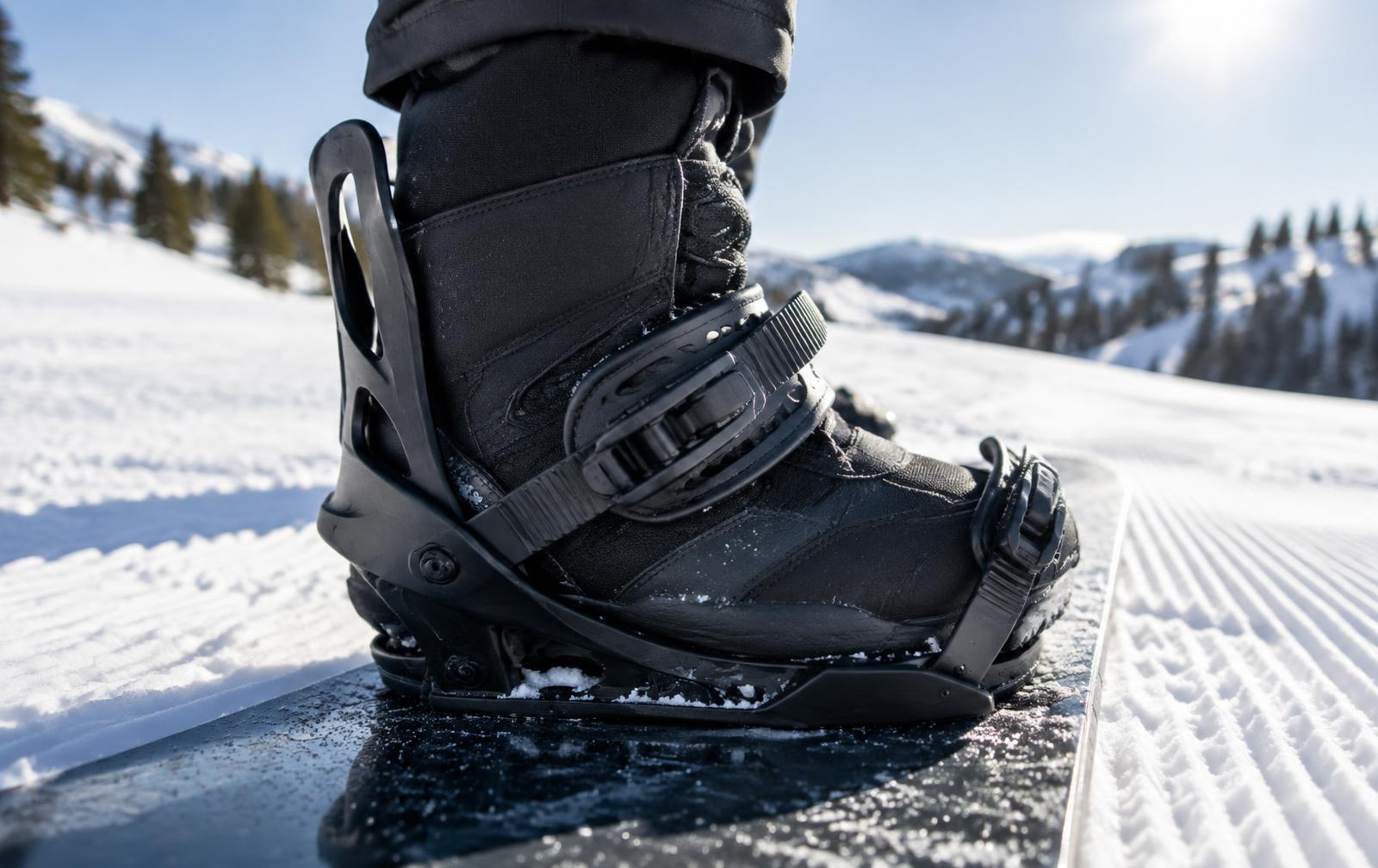
Best Snowboard Bindings of 2026: Top 10 Picks
Ten currently sold snowboard bindings — from do-it-all all-mountain bindings to strapless step-on and fast-entry systems — compared on published flex, entry type, and price.
Best All-Mountain Snowboards of 2026: Top 10 Boards for Groomers, Powder and Park
This guide compares 10 currently sold all-mountain snowboards for the 2025/26–2026 season by published shape, profile, flex and price, from a stiff camber carver to a playful asym twin, based on verified manufacturer and retailer specs.
The Best Beginner Snowboards for 2026
Ten current-production snowboards built for new riders, spanning forgiving all-mountain shapes, freestyle twins, women's-specific models and budget options.
One useful email a week
New guides, revisions to existing ones with a note on what changed and why, and price moves worth knowing about. One email a week, unsubscribe anytime.